Fully Integrated, Fire & Forget Data Acquisition


Computer Methods delivers a fully integrated data acquisition (DAQ) solution, combining advanced hardware and the PhoenixKonnect™ application into a seamless, high-performance platform. Mecalc's ALI25 and PhoenixKonnect™ are engineered with true Fire & Forget capability—requiring a host PC only for configuration and system arming.

Once acquisition is initiated, the DAQ operates fully autonomously while waiting for a qualified trigger event. The system is controlled over an Ethernet connection, without requiring an active connection to the host PC for successful data capture. Upon trigger, the hardware independently executes the post-trigger process, storing data in onboard DRAM and retaining it for download.

This architecture makes the system ideal for hostile, remote, or high-risk environments where maintaining a live PC connection is impractical or unsafe. Unlike streaming DAQ systems that depend on continuous connectivity, the ALI25 / PhoenixKonnect™ platform eliminates a critical point of failure—ensuring data is captured reliably.

With ALI25 and PhoenixKonnect™, data acquisition remains robust, secure, and reliable, even when communications do not.

PhoenixKonnect

An intuitive software solution for control, channel/signal validation, capture, analysis, and archiving of data. Supports simultaneous transient and streaming capture from multiple sources. PhoenixKonnect post-processing options support custom Python scripts and Kornucopia (The Noisy Data Experts™), a Matlab-based tool for analyzing physical test data. Download our brochure here.

MECALC

The ALI25 is the industry’s first 5M Sa/s, 24-bit acquisition module (datasheet) with a flat bandwidth response greater than 2 MHz, slew rates greater than 50 V/us and built-in signal conditioning for bridge-type transducers. WSB and ICP streaming modules are also available and supported by PhoenixKonnect.

SD-VXI

VX2824x & VX2805x cards have been a standard for high-speed transient data capture for over 20 years. PhoenixKonnect blends both platforms into unified data acquisition plans providing a means to utilize aging SD-VXI hardware while planning for the future. 

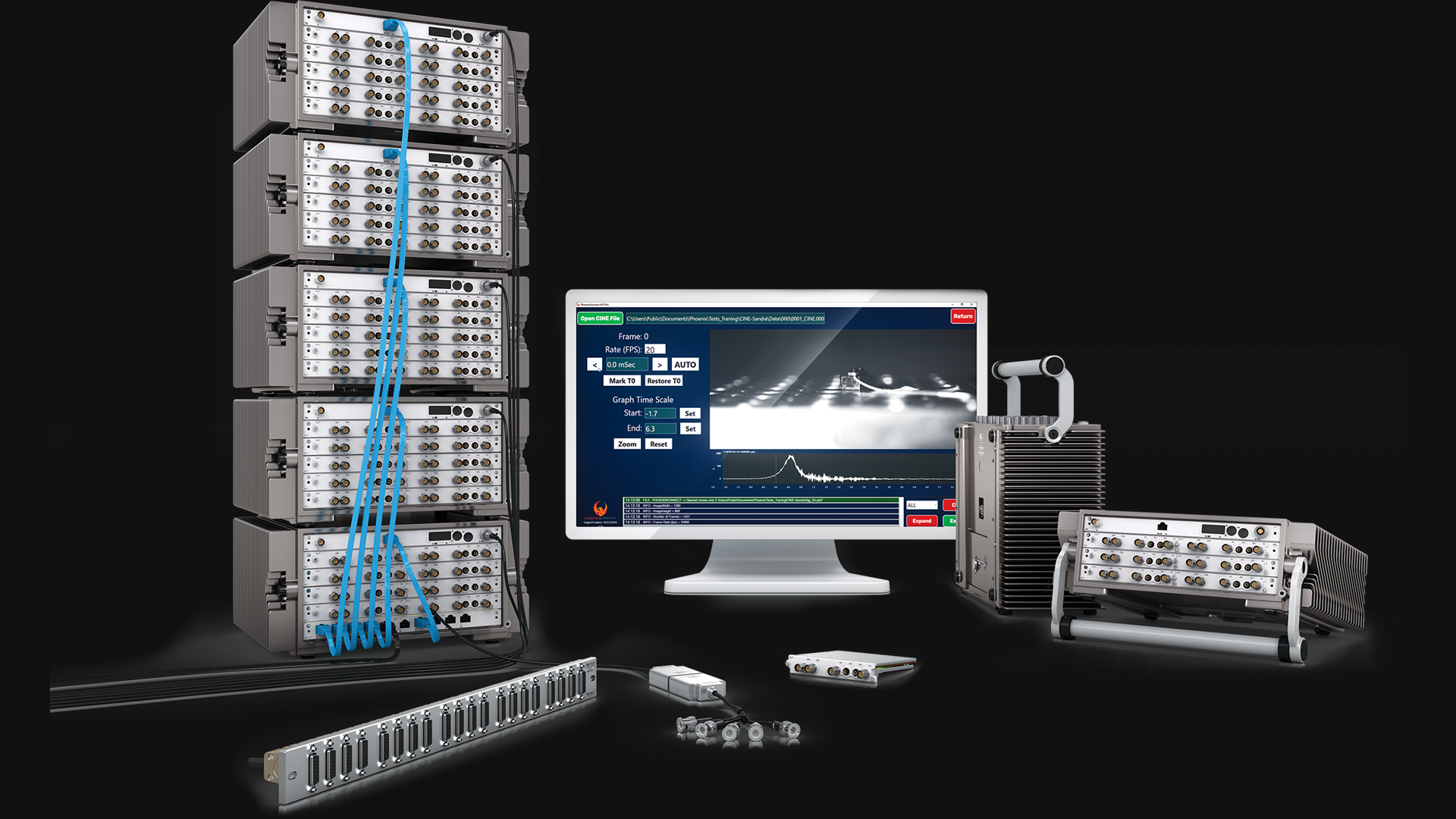
PhoenixKonnect on Display

PhoenixKonnect Analyzes Pyroshock Data

Comparison of PR and ICP Transducers

PhoenixKonnect Analyzes Pyroshock Data

Kornucopia® ML™

KEY SYSTEM SPECIFICATIONS:

  • 5 MSa/s at 24 bits
  • Slew Rate >50 v/µs
  • Bandwidth:
    • DC 1.0 MHz ±0.1dB at 5 MSa/s
    • DC 2.375 MHz -3dB at 5 MSa/s
  • Creates test plans for configuring sensors in a wide range of options (voltage substitution, current-excitation, bridge-balancing) with support for temperature sensors, strain gauges and TEDS.
  • Verifies measurement integrity prior to data capture with continuous pre-trigger monitoring, summarized channel information and sensor-fault detection.
  • Groups channels in clusters to support independent triggers and sample rate settings.
  • Applies templated transducer settings for quick and convenient channel configurations.
  • Supports high speed type K,T Thermocouple-to-Voltage Module >1 MHz bandwidth.
  • Multi-chassis coordination ensures detection of events is time and phase synchronous.
  • Post-event signal processing scans each channel and graphically highlights both analog and digital overloads.
  • Interfaces with Kornucopia® ML™, a MATLAB-based tool for post-processing of transient data (video).

Hypersonics Research at Purdue University

High-speed data acquisition systems with rapid triggering capabilities are essential for hypersonic shock tube testing where valuable data is captured within milliseconds. During our facility build-out, experts in our field recommended MECALC for our data collection system. The MECALC system has performed exceptionally well, consistently capturing high-speed sensor data in a reliable and repeatable way.
Colt Parker,  Hypersonic Test Engineer

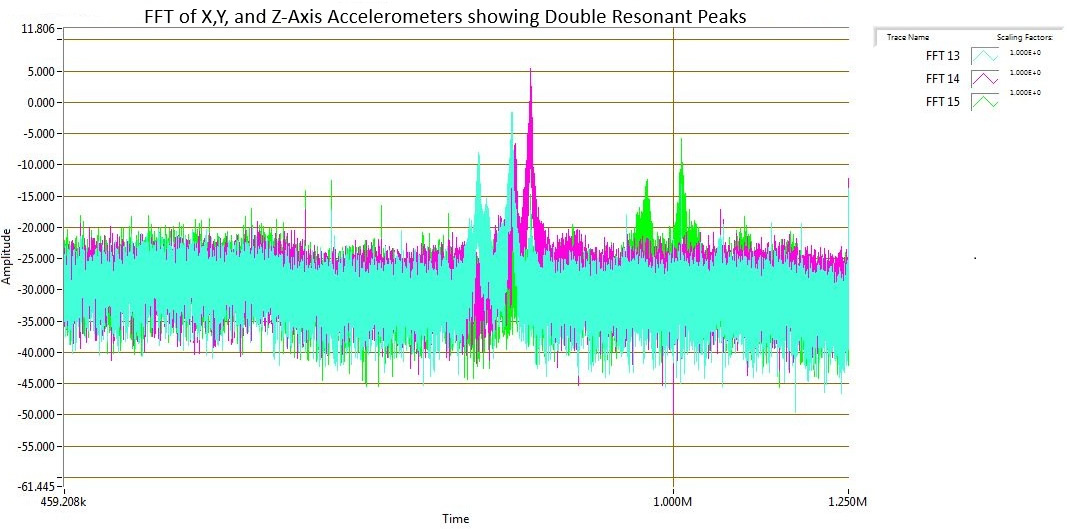
Mecalc ALI25 - Sample of FFT resonant frequencies from a triple-axis block arrangement.

Sandia National Labs

Data submitted courtesy of Mike Willis
REACH OUT

For more information or to setup a demonstration.


Copyright © 2025 Computer Methods All Rights Reserved.